Skip to main content
Search
Search This Blog
Serious Games, Neuroscience and Rehabilitation
Posts
May 30, 2021
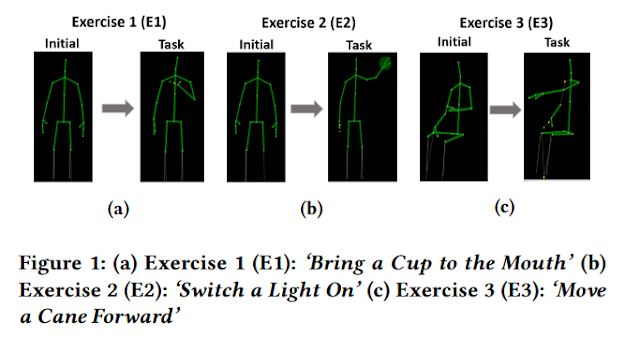
An Exploratory Study on Techniques for Quantitative Assessment of Stroke Rehabilitation Exercises
May 15, 2021
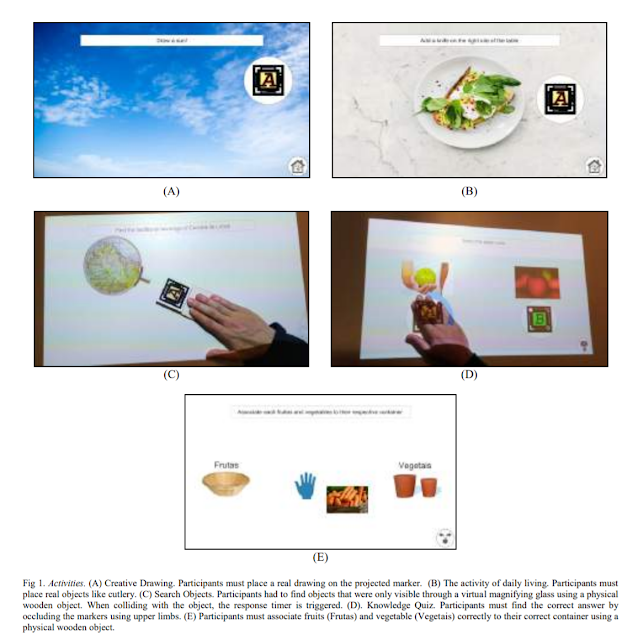
User Experience of Interactive Technologies for People with Dementia: A Comparative Observational Study
May 04, 2021
ISVR Early Career Investigator Award 2021
April 29, 2021
Editorial: Brain-Computer Interfaces and Augmented/Virtual Reality
May 31, 2020
Effects of prolonged multidimensional fitness training with exergames on the physical exertion levels of older adults
May 15, 2020
A Study on EEG Power and Connectivity in a Virtual Reality Bimanual Rehabilitation Training System
April 30, 2020
Impact of game mode in multi-user serious games for upper limb rehabilitation: a within-person randomized trial on engagement and social involvement
April 15, 2020
Lessons Learned from Gamifying Functional Fitness Training Through Human-Centered Design Methods in Older Adults
April 01, 2020
Impact of Game Mode on Engagement and Social Involvement in Multi-User Serious Games with Stroke Patients
March 15, 2020
Comparing adaptive cognitive training in virtual reality and paper-and-pencil in a sample of stroke patients
March 01, 2020
Inter- and Intra-Hemispheric EEG Connectivity in Healthy Subjects and Chronic Stroke Survivors
February 15, 2020
Efficacy and Brain Imaging Correlates of an Immersive Motor Imagery BCI-driven VR System for Upper Limb Motor Rehabilitation: A Clinical Case Report.
January 31, 2020
Musiquence: a framework to customize music and reminiscence cognitive stimulation activities for the dementia population.
January 15, 2020
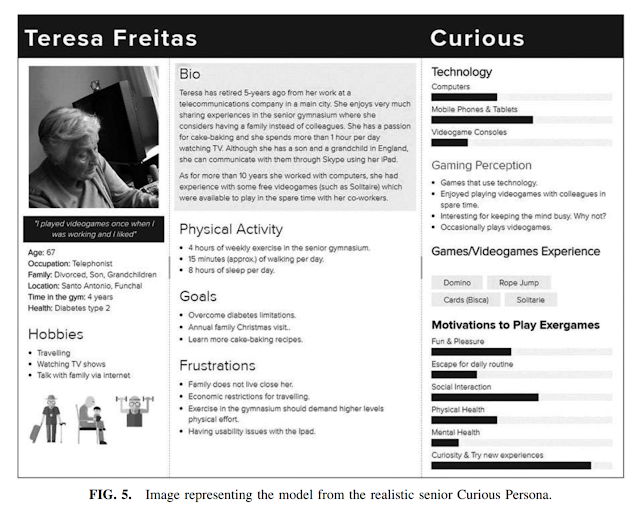
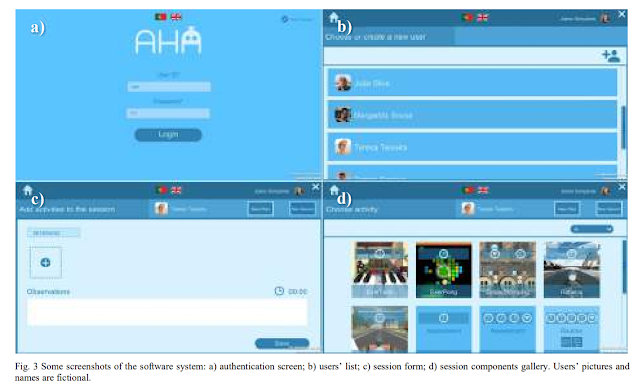
Usability evaluation of an integrative exergaming system for the senior population
December 31, 2019
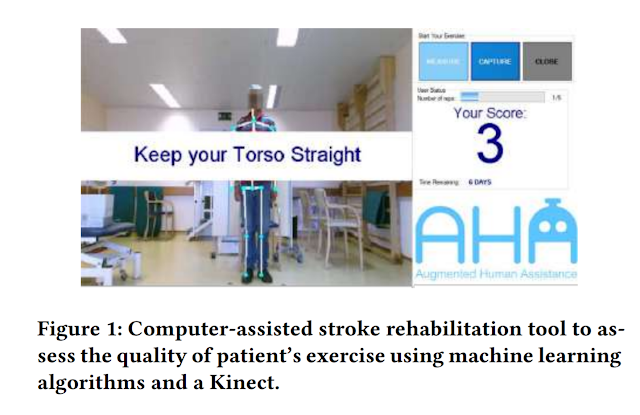
Learning to Assess the Quality of Stroke Rehabilitation Exercises
December 15, 2019
Is it necessary to show virtual limbs in action observation neurorehabilitation systems?
December 01, 2019
Reh@City v2.0: a comprehensive virtual reality cognitive training system based on personalized and adaptive simulations of activities of daily living
November 18, 2019
Reabilitação Virtual: Videojogos ao serviço do estudo da recuperação do dano cerebral
Newer Posts
Older Posts
Home